Industrial Excellence

PTFE Valve Seats

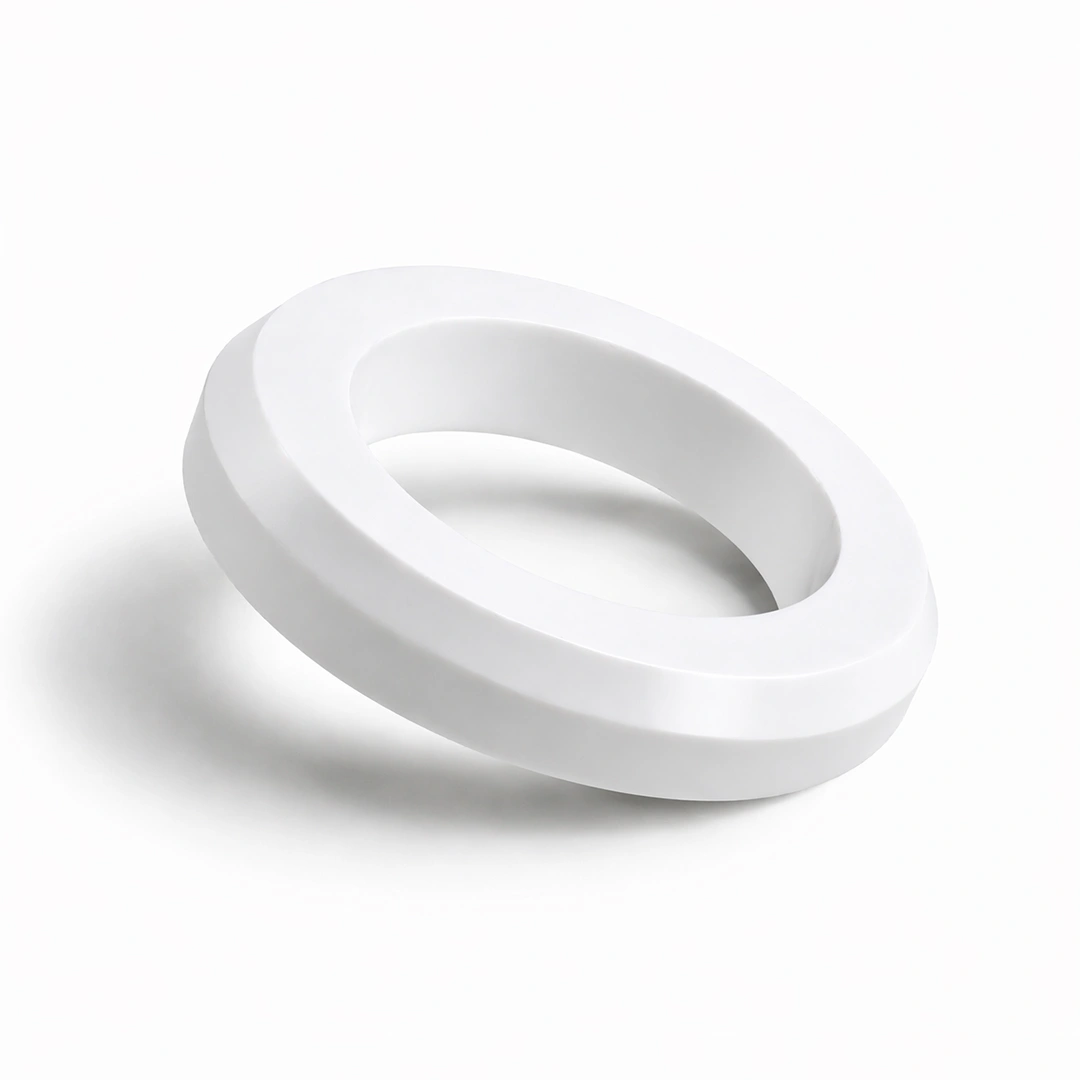
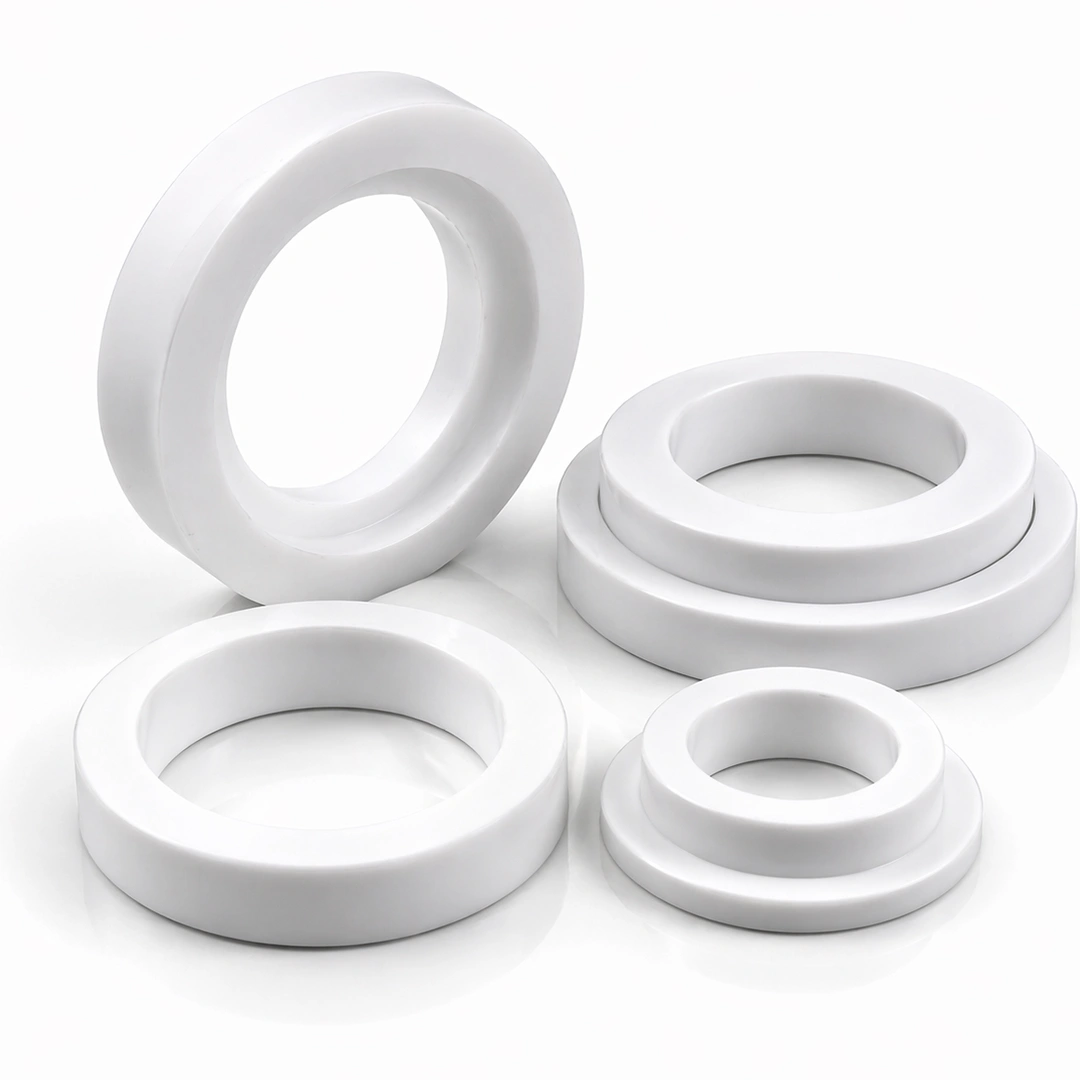
Goa Polymer manufactures precision-machined PTFE Valve Seats and PTFE Ball Valve Seats from our ISO 9001:2015 certified facility in Maharashtra, India. Available in virgin and filled PTFE grades for bore sizes ½″ to 12″, our valve seats deliver leak-proof shut-off in chemical, oil & gas, pharmaceutical, food processing, and water treatment systems — including applications with aggressive acids, high pressures, and extreme temperatures.

INNER DIAMETER (ID)

5 mm – 100 mm

OUTER DIAMETER (OD)

10 mm – 200 mm

THICKNESS

0.5 mm – 10 mm

SERVICE TEMPERATURE

−200°C to +260°C

MATERIAL GRADES

Virgin, Carbon, Glass, Bronze filled

CERTIFICATION

ISO 9001:2015 | MSME Registered

Product Description

What Are PTFE Valve Seats?

A PTFE Valve Seat is a precision-machined sealing ring fitted inside a ball, plug, or butterfly valve body. When the valve closes, the ball or disc presses against the PTFE seat ring to form a tight, leak-proof seal. PTFE’s low friction allows the ball to rotate smoothly without galling, while its chemical inertness ensures the seat remains unaffected by the media flowing through the valve.

At Goa Polymer, every PTFE Ball Valve Seat is machined from certified PTFE billets on CNC lathes to tight dimensional tolerances. Each seat is inspected for bore diameter, outer diameter, thickness, and surface finish before dispatch. For critical applications, a material test certificate (MTC) is provided with every shipment.


About this product

What Are PTFE Valve Seats?

A PTFE Valve Seat is a precision-machined sealing ring fitted inside a ball, plug, or butterfly valve body. When the valve closes, the ball or disc presses against the PTFE seat ring to form a tight, leak-proof seal. PTFE’s low friction allows the ball to rotate smoothly without galling, while its chemical inertness ensures the seat remains unaffected by the media flowing through the valve.

At Goa Polymer, every PTFE Ball Valve Seat is machined from certified PTFE billets on CNC lathes to tight dimensional tolerances. Each seat is inspected for bore diameter, outer diameter, thickness, and surface finish before dispatch. For critical applications, a material test certificate (MTC) is provided with every shipment.

Key Features & Benefits

Leak-Proof Shut-Off

PTFE's slight elasticity allows the seat to conform under valve closure torque, creating a bubble-tight ANSI Class VI shut-off — even on aged or lightly scored valve balls.

Full Chemical Resistance

Resists concentrated sulphuric acid, hydrochloric acid, chlorine, caustic soda, and most organic solvents. No swelling, softening, or degradation in prolonged chemical contact.

–200°C to +260°C Service

Operates across the full range from cryogenic liquefied gases to superheated steam and high-temperature chemical streams without embrittlement or creep failure.

Low Operating Torque

PTFE's coefficient of friction (0.05–0.10) reduces the torque needed to open and close valves — extending actuator life and enabling smaller, lighter actuators on automated systems

FDA-Compliant (Virgin Grade)

Virgin PTFE seats are non-toxic, non-leaching, and approved for direct contact with food, beverages, and pharmaceutical intermediates per FDA 21 CFR 177.1550.

Replaceable — Extends Valve Life

PTFE valve seats are designed as replaceable inserts. Replacing worn seats restores a valve to full sealing performance, avoiding the cost of complete valve replacement.

Engineering data

Technical Specifications – PTFE Gaskets

Standard Dimensions

Bore Size (NPS)

½″ – 12″

DN15 to DN300

Seat Thickness

2 – 10

millimetres

Dimensional Tolerance

±0.05

mm standard | tighter on request

⚙️Custom machined sizes: Non-standard bore profiles, stepped seats, soft-seat inserts, and seat-and-seal combinations are manufactured to your drawings. Share your valve datasheet or CAD file via our contact form.

Mechanical Properties (Virgin PTFE)

PropertyValueTest StandardNotes
Tensile Strength20 – 35 MPaASTM D638Pull resistance without fracture
Elongation at Break150 – 200 %ASTM D638Ductility allows seating conformance
Compressive Strength10 – 15 MPaASTM D695Load-bearing under valve closure
Hardness (Shore D)60 – 65ASTM D2240Surface hardness and indentation resistance
Density2.20 – 2.30 g/cm³ASTM D792Weight per unit volume
Coefficient of Friction0.05 – 0.10 (static)ASTM D1894Enables low-torque valve operation

Thermal Properties


PropertyValueTest StandardNotes
Continuous Service Temperature–200°C to +260°CePTFE grade: –268°C to +260°C
Short-Term Max Temperature+300°CBrief excursion without blowout
Thermal Conductivity0.25 – 0.69 W/m·KASTM C177Varies by filler content

Electrical Properties

PropertyValueTest StandardNotes
Dielectric Strength18 – 20 kV/mmASTM D149Electrically insulating
Tensile Strength10¹⁷ Ω·cmASTM D257Near-perfect non-conductor (virgin grade)

Chemical & Environmental Properties


PropertyValueNotes
Water Absorption< 0.01 %Unaffected by steam, water, or high-humidity service
Acid ResistanceExcellentH₂SO₄, HCl, HNO₃, HF, phosphoric acid
Alkali ResistanceExcellentNaOH, KOH, concentrated ammonia
Solvent ResistanceExcellentAcetone, MEK, toluene, chlorinated solvents
LimitationsAvoidMolten alkali metals, elemental fluorine, chlorine trifluoride at high temperature
Pressure ratings are indicative for standard gasket dimensions. Actual rating depends on flange class, bolt load, and gasket geometry. Contact our team for project-specific confirmation.


Material options

PTFE Valve Seat Grades & Types

The right PTFE grade for a valve seat depends on the operating pressure, media chemistry, temperature cycle, and whether the application requires FDA compliance. Goa Polymer supplies all four standard grades from a single facility.

Virgin PTFE Valve Seats

GP-VS-V | Broadest chemical resistance

100% unmodified PTFE. Preferred wherever media purity matters — food processing, pharmaceutical, and highly aggressive chemical service.

  • Widest chemical compatibility
  • FDA 21 CFR 177.1550 compliant
  • Lowest coefficient of friction (0.05–0.10)
  • Rated to Class 150 – Class 300
  • Best choice for: food, pharma, ultra-pure chemical lines

Carbon-Filled PTFE Valve Seats

GP-VS-C | High load & wear resistance

15–25% carbon/graphite filler. Significantly improves compressive strength and wear resistance — critical for high-cycle valves and high-pressure services.

  • Higher compressive strength vs virgin
  • Reduced creep under sustained seating load
  • Anti-static — safe in flammable-media valves
  • Rated to Class 600 in many configurations
  • Best choice for: oil & gas, petrochemical, high-cycle control valves

Glass-Filled PTFE Valve Seats

GP-VS-G | Dimensional stability under load

15–25% glass fibre filler. Reduces cold-flow and creep — the main failure mode of virgin PTFE seats in high-pressure or high-temperature flanged valves.

  • Reduced cold-flow / creep deformation
  • Higher stiffness and dimensional stability
  • Excellent for steam and high-temperature service
  • Rated to Class 300 – Class 600
  • Best choice for: chemical plants, steam systems, high-pressure gas valves

Bronze-Filled PTFE Valve Seats

GP-VS-B | Thermal conductivity & high load

40–60% bronze powder filler. Best thermal conductivity, highest load capacity. Used in dynamic applications where heat dissipation from the valve body matters.

  • Highest thermal conductivity of all PTFE grades
  • High load-bearing capacity
  • Not suitable for oxidising media or strong acids
  • Ideal for: hydraulic, pneumatic, and compressor valves

✂️Custom gasket fabrication: Non-circular profiles, manhole covers, equipment nozzle gaskets, heat exchanger bonnet gaskets — any shape cut to your drawing in any PTFE grade. Send your DXF or dimensional sketch via our contact form for a quote.

Industries served

Applications of PTFE Valve Seats

PTFE Valve Seats are specified wherever a valve must control flow of corrosive, high-purity, or thermally demanding media. Below are the primary industries where Goa Polymer’s ball valve seats are in active service.

Chemical Processing

Ball valves on acid dosing lines, solvent transfer, reactor feed and discharge. Carbon or glass-filled seats for sustained chemical exposure at pressure.

Oil & Gas

Wellhead isolation valves, pipeline block valves, gas metering skids. Carbon-filled PTFE seats withstand H₂S, crude oil, and high-pressure gas service.

Pharmaceutical & Biotech

CIP/SIP valves, sterile media transfer, cleanroom piping. Virgin PTFE seats are FDA-compliant and non-contaminating.

Food & Beverage

Filling lines, pasteurisation circuits, dairy equipment. Virgin PTFE — non-reactive, easy to clean, no taste or odour transfer.

Water Treatment

Chlorine dosing valves, coagulant addition, filtration feed and drain. Resists chlorine, hypochlorite, and treatment chemicals.

Power Generation

Steam isolation valves, boiler feedwater, condensate recovery systems. Glass-filled seats handle steam and temperature cycling without creep.

Marine & Offshore

Seawater, ballast, and brine service valves. PTFE is unaffected by saltwater and prevents galvanic coupling between valve body and seat.

Pulp & Paper

Black liquor, white liquor, and bleach circuit valves where aggressive alkaline and chlorine-based chemicals attack metal seats.

Cryogenic Applications

LNG, liquid nitrogen, and liquid oxygen valves. PTFE remains flexible and seals reliably at temperatures down to –200°C without embrittlement.

Material comparison

PTFE Valve Seat vs Other Seat Materials

Valve seats are available in several materials. Here is how PTFE compares to PEEK, RPTFE (reinforced PTFE), metal, and nylon for the properties that matter most in industrial valve selection.


ParameterPTFE ✓RPTFE (filled)PEEKMetal (SS316)Nylon
Chemical resistance Excellent Excellent● Very good Limited (HCl attack) Poor in acids
Service temperature–200°C to +260°C–200 to +260°C–200 to +250°C–200 to +870°C–40 to +100°C
Coefficient of friction0.05–0.10 (lowest)0.10–0.200.35–0.450.50–0.800.20–0.45
Shut-off class (ANSI) Class VI (bubble-tight) Class VI Class IV–VI Class II–IV typically Class VI
FDA / food safe Yes (virgin)Grade-dependent Yes Yes (316L)Grade-dependent
Creep resistanceModerate (filled grades better)Good Excellent ExcellentPoor (absorbs moisture)
Cost (relative)Low – mediumMedium HighHighLow
Replaceability Easy — drop-in insert EasyEasy Requires machining Easy
Values are indicative. Contact Goa Polymer for application-specific grade recommendations based on your process conditions.

Common questions

Frequently Asked Questions — PTFE Valve Seats

What is a PTFE valve seat and how does it work?

A PTFE valve seat is a precision-machined ring inserted into the body of a ball, plug, or butterfly valve. When the valve closes, the ball or disc presses against the seat to form a seal. PTFE’s slight compressibility allows the seat to conform to minor surface imperfections on the valve ball, achieving a bubble-tight ANSI Class VI shut-off. Its low friction (0.05–0.10 coefficient) means the valve opens and closes smoothly with minimal torque.

Standard bore sizes range from ½″ to 12″ (DN15 to DN300) with seat thickness from 2 mm to 10 mm. Non-standard bore sizes, larger diameters, and custom profiles (stepped, contoured, seat-and-seal combinations) are manufactured to customer drawings. Contact us with your valve model number or dimensional drawing for a quote.

Use virgin PTFE for food, pharmaceutical, and highly corrosive media where purity is non-negotiable. Choose carbon-filled PTFE for high-pressure or high-cycle applications in oil, gas, or petrochemical service. Glass-filled PTFE is best where creep under sustained seating load is the primary concern — steam systems, for example. Bronze-filled is selected when thermal conductivity and high mechanical load are both required. Our team can advise based on your valve datasheets.

Yes. Virgin PTFE seats are used in Class 150 to Class 300 (PN10–PN50) valve applications. Carbon-filled and glass-filled grades extend pressure capability to Class 600 (PN100) in many configurations. Actual pressure rating depends on bore size, wall thickness, and operating temperature — contact us for project-specific confirmation.

Yes. PTFE remains flexible and maintains its sealing properties at temperatures as low as –200°C, making it one of the few polymer materials suited for cryogenic service. It is widely used in LNG, liquid nitrogen, and liquid oxygen valves where metal-to-metal seats would require extreme surface finish to achieve adequate shut-off.

Service life depends on cycle frequency, operating pressure, media abrasiveness, and whether the valve operates under sustained load. In clean chemical service with moderate cycling, PTFE seats routinely last 5–10 years. In high-cycle or abrasive service, inspect seats annually. Signs of replacement include increased leakage past the seat, a noticeable change in valve operating torque, or visible deformation of the seat ring.

Yes. A material test certificate (MTC) confirming PTFE grade, dimensions, and key mechanical properties is provided with every bulk shipment. Our ISO 9001:2015 quality system ensures full traceability from raw billet to finished seat. Third-party testing at accredited laboratories can be arranged for critical applications on request.

Yes. We regularly machine PTFE and filled PTFE valve seats to drawings provided by valve OEMs and engineering contractors. Send us your DXF, PDF drawing, or valve model number and we will confirm dimensional feasibility and provide a quotation. Custom profile seats, angled faces, and multi-step designs are within our machining capability.

Features

Key Features & Benefits of PTFE Valve Seats

Leak-Proof Shut-Off

PTFE's slight elasticity allows the seat to conform under valve closure torque, creating a bubble-tight ANSI Class VI shut-off — even on aged or lightly scored valve balls.

Full Chemical Resistance

Resists concentrated sulphuric acid, hydrochloric acid, chlorine, caustic soda, and most organic solvents. No swelling, softening, or degradation in prolonged chemical contact.

–200°C to +260°C Service

Operates across the full range from cryogenic liquefied gases to superheated steam and high-temperature chemical streams without embrittlement or creep failure.

Low Operating Torque

PTFE's coefficient of friction (0.05–0.10) reduces the torque needed to open and close valves — extending actuator life and enabling smaller, lighter actuators on automated systems.

FDA-Compliant (Virgin Grade)

Virgin PTFE seats are non-toxic, non-leaching, and approved for direct contact with food, beverages, and pharmaceutical intermediates per FDA 21 CFR 177.1550.

Replaceable — Extends Valve Life

PTFE valve seats are designed as replaceable inserts. Replacing worn seats restores a valve to full sealing performance, avoiding the cost of complete valve replacement.

Why Choose

Why Choose Goa Polymer for PTFE Ball Valve Seats?

100%

ISO 9001:2015
Quality Assurance

CNC-Machined to Tight Tolerances

Every PTFE valve seat is turned on CNC lathes to ±0.05 mm. Bore diameter, face runout, and surface finish are verified before dispatch — no manual filing or hand-fitting.

All Four PTFE Grades In-House

Virgin, carbon-filled, glass-filled, and bronze-filled PTFE billets are stocked and machined under one roof in Maharashtra — faster lead times, single-source quality control.

Custom Machining to Your Drawing

Standard and non-standard seat profiles, bore sizes from DN15 to DN300 and beyond, stepped and angled seat faces — all manufactured to your valve OEM specifications.

ISO 9001:2015 Quality System

Full material traceability, in-process inspection, and dimensional verification records. Material test certificates provided on request for every batch.

Bulk Pricing & Fast Dispatch

Direct manufacturer pricing — no distributor margin. Standard sizes dispatched in 3–7 working days. Volume pricing available for OEM and annual supply contracts.

FAQ's

Frequently Asked Questions

Everything you need to know about our PTFE products, customization, and delivery.

Have another question? →

A PTFE valve seat is a precision-machined ring inserted into the body of a ball, plug, or butterfly valve. When the valve closes, the ball or disc presses against the seat to form a seal. PTFE’s slight compressibility allows the seat to conform to minor surface imperfections on the valve ball, achieving a bubble-tight ANSI Class VI shut-off. Its low friction (0.05–0.10 coefficient) means the valve opens and closes smoothly with minimal torque.

Standard bore sizes range from ½″ to 12″ (DN15 to DN300) with seat thickness from 2 mm to 10 mm. Non-standard bore sizes, larger diameters, and custom profiles (stepped, contoured, seat-and-seal combinations) are manufactured to customer drawings. Contact us with your valve model number or dimensional drawing for a quote.

Use virgin PTFE for food, pharmaceutical, and highly corrosive media where purity is non-negotiable. Choose carbon-filled PTFE for high-pressure or high-cycle applications in oil, gas, or petrochemical service. Glass-filled PTFE is best where creep under sustained seating load is the primary concern — steam systems, for example. Bronze-filled is selected when thermal conductivity and high mechanical load are both required. Our team can advise based on your valve datasheets.

Yes. Virgin PTFE seats are used in Class 150 to Class 300 (PN10–PN50) valve applications. Carbon-filled and glass-filled grades extend pressure capability to Class 600 (PN100) in many configurations. Actual pressure rating depends on bore size, wall thickness, and operating temperature — contact us for project-specific confirmation.

Yes. PTFE remains flexible and maintains its sealing properties at temperatures as low as –200°C, making it one of the few polymer materials suited for cryogenic service. It is widely used in LNG, liquid nitrogen, and liquid oxygen valves where metal-to-metal seats would require extreme surface finish to achieve adequate shut-off.

Service life depends on cycle frequency, operating pressure, media abrasiveness, and whether the valve operates under sustained load. In clean chemical service with moderate cycling, PTFE seats routinely last 5–10 years. In high-cycle or abrasive service, inspect seats annually. Signs of replacement include increased leakage past the seat, a noticeable change in valve operating torque, or visible deformation of the seat ring.

Yes. A material test certificate (MTC) confirming PTFE grade, dimensions, and key mechanical properties is provided with every bulk shipment. Our ISO 9001:2015 quality system ensures full traceability from raw billet to finished seat. Third-party testing at accredited laboratories can be arranged for critical applications on request.

Yes. We regularly machine PTFE and filled PTFE valve seats to drawings provided by valve OEMs and engineering contractors. Send us your DXF, PDF drawing, or valve model number and we will confirm dimensional feasibility and provide a quotation. Custom profile seats, angled faces, and multi-step designs are within our machining capability.

Ready to Engineer Your Solution?

Get expert consultation and a direct manufacturer quote for your project within 24 hours.


Pop up form

Contact Us